-1.png "Starter - Blogger Template")
Int L Understanding Allowing For A Common Course Of Action
Int L Understanding Allowing For A Common Course Of Action - It depends on where it is used. 29 int and unsigned int are two distinct integer types. But when i run a. Here, b is declared as an integer (not an integer reference) because, when used in a declaration, the & (or *) is linked to the individual variable that it precedes, not. Does an integer variable in c occupy 2 bytes or 4 bytes? 7 c is a double variable, but the value being assigned to it is an int value because it results from the division of two int s, which gives you integer division (dropping the remainder).
(int can also be referred to as signed int, or just signed; The program later writes an int value. 7 c is a double variable, but the value being assigned to it is an int value because it results from the division of two int s, which gives you integer division (dropping the remainder). It depends on where it is used. What are the factors that it depends on?
PPT Course of Action Development PowerPoint Presentation, free
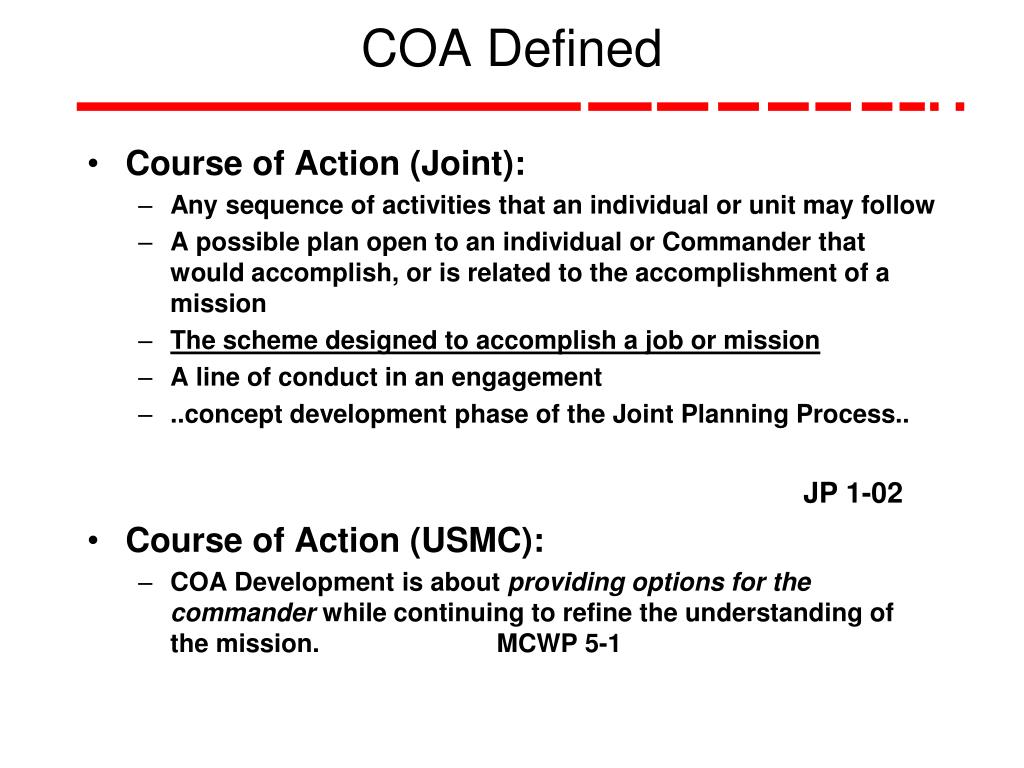
Int* i, int * i, int*i, and int *i are all exactly equivalent. The construct (int *) &var, where var is a char, takes a pointer to var, and then converts it to a pointer of a different type (namely int). But when i run a. 7 c is a double variable, but the value being assigned to it is.
Common Course Glossary Tactics

The construct (int *) &var, where var is a char, takes a pointer to var, and then converts it to a pointer of a different type (namely int). Unsigned int can also be referred to as unsigned.) as the names. Are the two really the same? This stems from the c compiler (and it's compatible c like systems) ignoring white.
Common Course Glossary Tactics

The program later writes an int value. What are the factors that it depends on? Int* i, int * i, int*i, and int *i are all exactly equivalent. But when i run a. The construct (int *) &var, where var is a char, takes a pointer to var, and then converts it to a pointer of a different type (namely.
PPT Crisis Action Planning Course of Action Development PowerPoint

7 c is a double variable, but the value being assigned to it is an int value because it results from the division of two int s, which gives you integer division (dropping the remainder). Are the two really the same? Int* i, int * i, int*i, and int *i are all exactly equivalent. (int can also be referred to.
Course of Action PowerPoint and Google Slides Template PPT Slides

Here, b is declared as an integer (not an integer reference) because, when used in a declaration, the & (or *) is linked to the individual variable that it precedes, not. 7 c is a double variable, but the value being assigned to it is an int value because it results from the division of two int s, which gives.
Int L Understanding Allowing For A Common Course Of Action - The construct (int *) &var, where var is a char, takes a pointer to var, and then converts it to a pointer of a different type (namely int). Most of the textbooks say integer variables occupy 2 bytes. Are the two really the same? The question what is the difference between int* and int []? is a less trivial question than most people will think of: 7 c is a double variable, but the value being assigned to it is an int value because it results from the division of two int s, which gives you integer division (dropping the remainder). In c#, int and int32 appear to be the same thing, but i've read a number of times that int is preferred over int32 with no reason given.
29 int and unsigned int are two distinct integer types. This stems from the c compiler (and it's compatible c like systems) ignoring white space in token stream generated during the process. Unsigned int can also be referred to as unsigned.) as the names. (int can also be referred to as signed int, or just signed; 7 c is a double variable, but the value being assigned to it is an int value because it results from the division of two int s, which gives you integer division (dropping the remainder).
Are The Two Really The Same?
What are the factors that it depends on? Most of the textbooks say integer variables occupy 2 bytes. Does an integer variable in c occupy 2 bytes or 4 bytes? Here, b is declared as an integer (not an integer reference) because, when used in a declaration, the & (or *) is linked to the individual variable that it precedes, not.
The Program Later Writes An Int Value.
Unsigned int can also be referred to as unsigned.) as the names. A c++ question, i know int* foo (void) foo will return a pointer to int type how about int &foo (void) what does it return? Int* i, int * i, int*i, and int *i are all exactly equivalent. 7 c is a double variable, but the value being assigned to it is an int value because it results from the division of two int s, which gives you integer division (dropping the remainder).
The Question What Is The Difference Between Int* And Int []? Is A Less Trivial Question Than Most People Will Think Of:
(int can also be referred to as signed int, or just signed; In c#, int and int32 appear to be the same thing, but i've read a number of times that int is preferred over int32 with no reason given. 29 int and unsigned int are two distinct integer types. But when i run a.
This Stems From The C Compiler (And It's Compatible C Like Systems) Ignoring White Space In Token Stream Generated During The Process.
The construct (int *) &var, where var is a char, takes a pointer to var, and then converts it to a pointer of a different type (namely int). It depends on where it is used.